






Inside the article
Request a product demo
Get a demo and clarify your doubts about our software.
Key Takeaways
- A business license for rental property may be required, depending on your city or county regulations.
- Some areas also require rental permits, property registration, or zoning approval before leasing.
- Licensing rules can vary for long-term rentals, short-term rentals, and multi-unit properties.
- Operating without the required license can lead to fines, legal notices, or rental restrictions.
- Landlords may need inspections, safety approvals, and a Tax Identification Number during the process.
- Rental property license costs and renewal fees differ based on location and property type.
Owning a rental property comes with more responsibilities than just finding tenants and collecting rent. This guide explains whether landlords need a business license for rental property, the types of licenses required, and the steps to stay legally compliant.
Understanding Business Licensing for Rental Properties
A business license is one of the common requirements landlords may come across when starting a rental property business. The type of approval needed usually depends on local rental laws and the kind of property being rented.
Why Rental Properties May Require a Business License
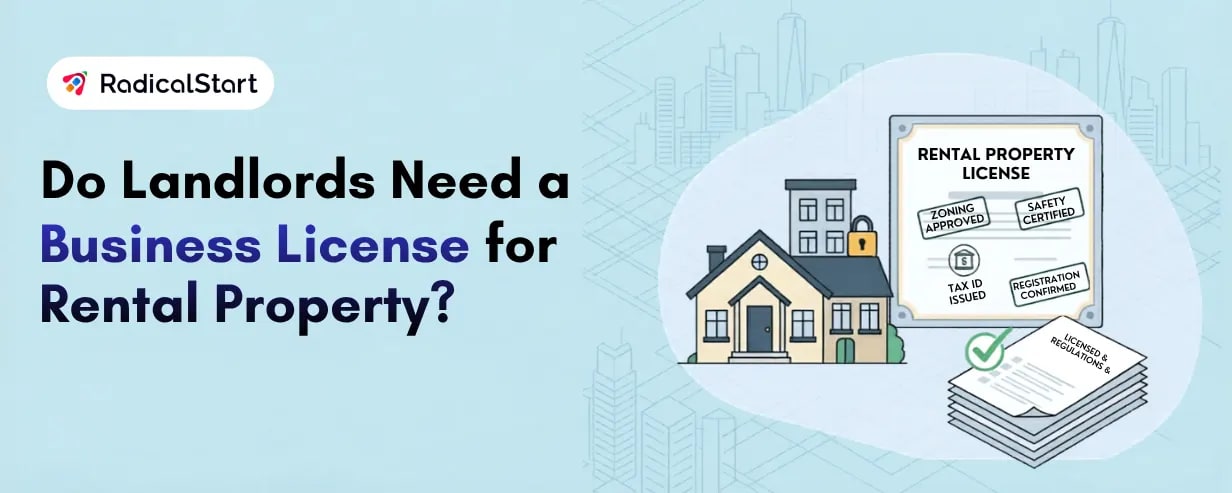
Some local governments require landlords to obtain a business license, rental permit, or property registration before leasing a property. These requirements help local authorities regulate rental activity and confirm that properties meet housing and safety standards. The exact requirements depend on local laws and the type of rental property being operated.
Why Licensing Matters for Landlords
Following the proper licensing process helps landlords operate legally and avoid unnecessary penalties or compliance issues. It also creates a more professional rental process and helps prevent problems related to registration issues or local housing regulations.
Along with licensing, landlords should also protect their property from financial risks. Understanding vacation rental insurance cost and coverage helps safeguard against unexpected damages and liabilities.
Rental Property Licensing Requirements for Landlords
Before renting out a property, landlords should check the legal requirements in their area. These rules can affect how the property is rented, managed, and approved for tenants
Local Licensing Laws and Zoning Rules
Some cities have specific rules about where rental properties can operate and what type of rentals are allowed. These rules may affect occupancy limits, short-term rentals, or multi-unit housing. Checking zoning and housing guidelines early helps landlords avoid future restrictions or legal issues.
Property Registration Requirements
Some areas require landlords to officially register their rental property before leasing it to tenants. This process may include submitting owner details, property information, or housing approval records. Registration helps local authorities keep track of approved rental properties and maintain housing standards.
Types of Licenses Required for Rental Properties
Business License for Rental Property
In some cities, renting a home is treated like running a small business. In that case, you may need a business license before you start collecting rent. This is more common if you own multiple properties or manage rentals regularly.
Rental Property License
Some places ask for a rental license to make sure the home is safe for tenants. This usually means the property may need to pass basic checks before it can be rented out. Not every city requires this, but where it exists, it is focused only on housing rules.
Certificate of Occupancy
This is proof that a property is safe to live in. It is usually given after a new building is constructed or after major changes or renovations are made to the property. Without this approval, some places will not allow tenants to move in because the home must meet basic safety standards first.
Short Term Rental License
If you are renting your property for short stays (like vacation guests), some cities require a special short-term rental license. This helps control tourist stays in residential areas and may include simple rules like taxes or guest limits.
Requirements for Getting a Business License for Rental Property
Before you can legally operate a rental property business, you need to complete a few key steps. These steps help you stay compliant with local rules and set up your rental activity in the correct way.
Research Local Regulations
Before starting the licensing process, gather information about application timelines, required approvals, and rental categories in your area. Understanding these details early can help prevent delays during registration.
Register the Rental Property Business
If your location treats rental income as a business, register your rental activity with the city office or state office. This step records your rental operation officially and may be required before applying for a license or permit.
Obtain a Tax Identification Number
Apply for a TIN through the IRS by filling out the required application form and submitting your personal and business details. If you already have a TIN for another business, you can use the same one for your rental property. Once issued, use it for tax reporting and rental income filings.
Meet Safety and Zoning Compliance
Check if your property is allowed to operate as a rental under local zoning rules. Some areas may require basic safety checks or audits before approval. Make sure your property meets these conditions before moving forward with licensing.
What Happens if You Rent Property Without a Business License
Renting without the required license can lead to legal and financial trouble depending on local rules. Authorities may take action if a property is operating without proper approval
Fines and Legal Penalties
Landlords may face fines, penalty fees, or legal notices for operating without a required rental license or permit. In some cases, cities can also restrict renting activity until the issue is fixed.
Compliance Risks for Landlords
Without proper licensing, landlords may struggle during compliance checks, registrations, or tenant disputes. It can also create delays in legal approvals and affect the ability to continue renting the property smoothly.
How Much Does a Rental Property Business License Cost
The cost of a rental property business license in the U.S. is not fixed. It changes based on the city rules, property type, and how local authorities classify rental operations. Some locations charge a simple yearly fee, while others may include inspection or registration charges along with it.
Factors That Affect Licensing Fees
The total cost usually depends on a few key conditions:
- Location (city or county regulations)
- Number of rental units
- Type of rental (short-term or long-term)
- Property size
- Inspection requirements
- Compliance or violation history
Because of these factors, costs can stay low in smaller cities but become higher in regulated metropolitan areas where rental monitoring is stricter.
Renewal Fees and Ongoing Costs
Most cities in the U.S. require a business license for rental property to be renewed regularly, usually every year or every two years, depending on local regulations. The renewal cost is not the same everywhere. In many U.S. cities, the average annual renewal fee is around $69, but the final amount can change based on inspection charges, property type, and late renewal penalties set by the local authority.
Since every city follows different rules for business licenses for rental property, landlords should always check the local fee structure before renewing.
Steps to Apply for a Rental Property Business License
Applying for a business license for rental property usually involves a few standard steps. While the process can vary by location, most landlords need to complete local registration, submit documents, and meet inspection requirements before renting legally.
Verify Local Requirements
Visit your local housing or business licensing website to review the rental license application process. Check the required forms, fees, inspection details, and other approvals needed before applying.
Submit Applications and Documents
Complete the application and provide the necessary paperwork. This may include proof of ownership, identification details, tax information, or rental business records based on your area’s process.
Complete Inspections and Receive Approval
Some cities require an inspection before issuing a rental license. Officials may review safety features such as plumbing, smoke detectors, electrical systems, and overall housing conditions. Once everything meets the required standards, the license or permit is issued.
Conclusion
Rental property laws can vary from one city to another, which makes understanding licensing requirements an important part of running a rental business. Staying compliant helps protect your property, income, and long-term operations. For landlords planning to expand their operations, understanding how to start a rental business can also support business growth and better compliance planning.
If you are looking to build your own rental platform, a vacation rental script can help automate property listings, reservations, payments, and overall rental management more efficiently.
Request a product demo
Get a demo and clarify your doubts about our software.

