






Inside the article
Request a product demo
Get a demo and clarify your doubts about our software.
Key Takeaways
- Ride-hailing and ride-sharing are not the same thing. If you want to build in this space, knowing the gap is your starting point.
- Every ride-hailing trip follows the same eight steps, from app open to payment. That flow is the product you are building.
- People use ride apps because of price clarity, speed, and ease of payment, not just convenience.
- Trust is built through screens. Ratings, live tracking, and driver photos replaced the old ways of feeling safe.
- Most common beliefs about ride-hailing being unsafe or only for big cities are wrong.
Ten years ago, getting a cab meant standing on a street and hoping one drove past. Today, millions of people open an app, tap a button, and have a car at their door in minutes.
That shift did not happen by luck. Ride-hailing changed how cities move, how people think about owning a car, and how founders like you build transport businesses. If you want to understand what ride-hailing is, how it works, and why it keeps growing, here is how it all works.
What Is Ride-Hailing?
Ride-hailing is a service that lets people book a private car through a phone app. The app connects the rider with a nearby driver, handles the payment, and tracks the trip from start to finish. No cash, no phone calls, no waiting at a taxi stand. If you are thinking about starting a ride-hailing business, this is the core product you are selling.
What is ride hailing apps, in simple terms? It is software that connects riders and drivers through GPS, payments, and real-time tracking, all in one place.
Ride Hailing vs Ride Sharing: What Is the Real Difference
People use these two terms as if they mean the same thing. They do not.
Ride-hailing means you book a private car for yourself. The driver picks you up and takes you to your stop. You pay for the whole trip. Uber and Bolt are ride-hailing services.
Ride-sharing means people going the same way share one car and split the cost. BlaBlaCar is a good example. It connects people making the same long-distance trip between cities, not a driver working a shift.
So when someone asks what a ride-sharing service is, the short answer is this. True ride sharing means shared trips and split costs. Ride-hailing is a private booking. The industry mixes the two terms, but if you are building a platform, getting this right from the start will shape every decision you make.
Examples People Already Know
Here are the platforms most people have already heard of.
📍Uber is the most well-known name across the globe.
📍Bolt runs across Europe and Africa with lower prices.
📍DiDi leads in China.
📍Grab covers Southeast Asia.
Each one uses the same basic model. App, driver, trip, payment. The gaps come down to pricing, local rules, and which cities they serve. Your version of this model starts with picking one market and owning it.
What Happens From Booking To Drop-Off
Here is exactly what happens every time someone uses a ride-hailing app. Each step is a feature your platform needs to get right.
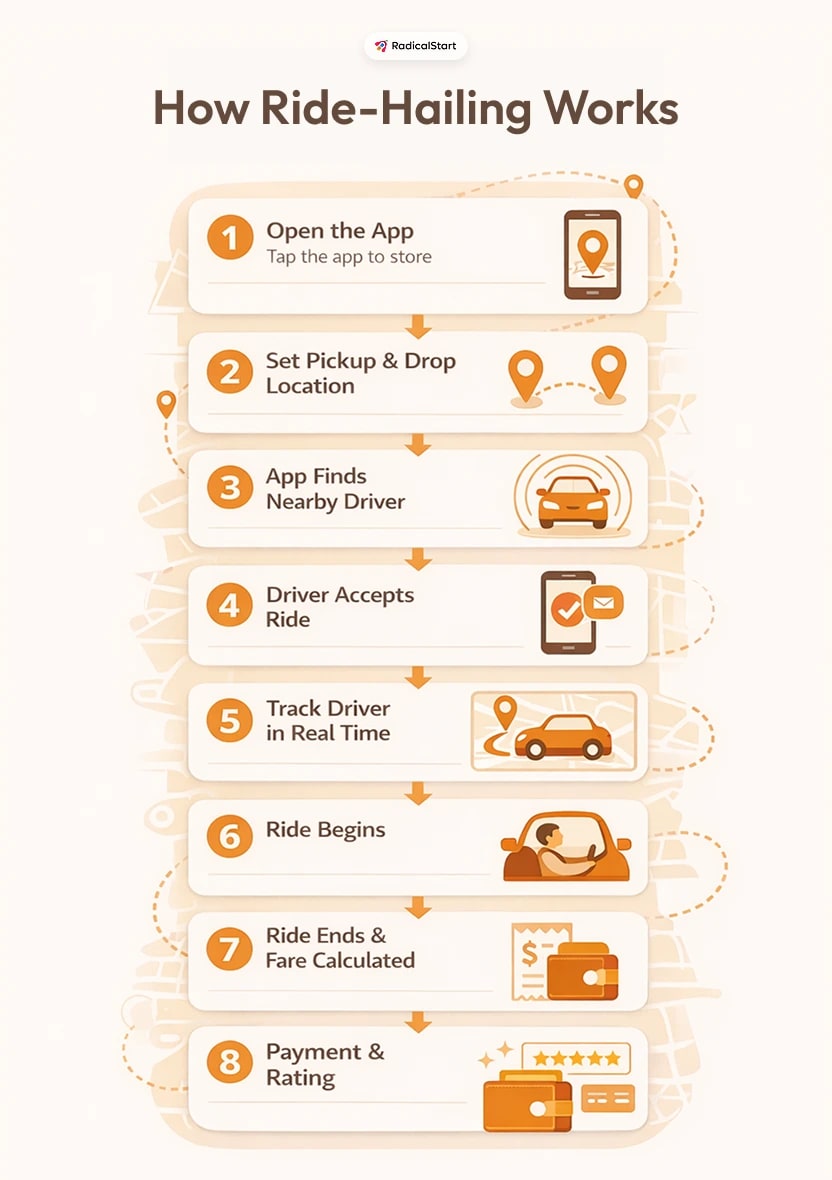
User Opens the Ride-Hailing App
The rider opens the app, and it pulls their GPS location right away. No need to type where you are. The map shows your spot and nearby drivers in real time.
Enter Pickup and Drop Location
The rider types or picks a destination. The app works out the route, shows the travel time, and displays the fare before the booking goes through. The rider knows the cost before they commit.
App Finds a Nearby Driver
Once the rider confirms, the app sends the request to the best available driver based on location and travel time, similar to how Uber matching works. The system uses GPS data to find the right match, accounting for distance, traffic, and how fast they can get there.
Modern ride-hailing platforms also use AI-driven taxi dispatch systems to improve driver matching, reduce waiting time, and optimize ride allocation. Learn more about how AI-driven taxi dispatch works and how it improves ride-hailing operations.
Driver Accepts the Ride Request
The driver gets a note with the pickup spot, the trip length, and what they will earn. They have a short window of around 15 seconds to accept or skip. If they skip, the request goes to the next available driver.
User Tracks the Driver in Real Time
After the driver accepts, the rider watches the car move toward them on the map. They can see the driver’s name, photo, car type, and plate number. This one feature built more trust in ride-hailing than anything else. For you as a founder, it is not optional.
Ride Begins and Follows the GPS Route
The driver follows the route shown in the app. Both the rider and the platform watch the route in real time. If the driver takes a wrong turn, the app fixes the route. This keeps trips fair and gives riders peace of mind.
Ride Ends, and Fare Is Calculated
When the car reaches the drop spot, the app detects the stop and closes the trip. The final fare is worked out based on distance, time, and any price surge that applied during the ride.
User Pays and Gives a Rating
Payment goes through the card or wallet saved in the app. No cash needed. Once payment is done, both the rider and driver rate each other. That two-way rating system is what keeps the platform safe and the service quality up.
Why Ride-Hailing Services Are Popular
The growth of ride-hailing is not hard to explain. It fixes real problems that old taxis never fully solved. These are the same reasons your future users will choose your platform over calling a cab.
No Waiting on the Road
Before ride-hailing, getting a cab meant standing outside and hoping. In bad weather, late at night, or in areas with few taxis, that was a real problem. Ride-hailing puts a car on your screen before you even step out the door.
You Know the Price Before the Ride
This one changed everything. Old taxis used meters, and riders never knew the final cost until the trip ended. Ride-hailing shows you the fare before you confirm. That one change removed one of the biggest pains with cab travel. Build this into your app and never remove it.
Works Anytime, Anywhere
Ride-hailing apps run 24 hours a day. Early morning airport runs, late-night rides home, trips in parts of the city with no regular cab service. The app does not have shifts or breaks.
Different Cars for Different Budgets
Most platforms offer more than one ride type. A basic car for daily trips, a bigger car for groups, a high-end option for business travel. Riders pick what fits their budget at that moment.
Easy Payment Options
Cards, digital wallets, and in-app credit. Riders do not need cash and do not need to worry about change. For many people, especially younger riders, this alone is reason enough to pick an app over a street cab.
What Ride-Hailing Teaches Us About Modern Life
The rise of ride-hailing says something bigger about how people live and make choices today. As an entrepreneur, these three shifts are the market forces working in your favor.
People Value Time More Than Money
Ride-hailing is often more costly than public transport. But millions of people pay that gap every day because the time saved is worth more to them. That tells you a lot about where people put their money right now.
Phones Are Becoming Travel Tools
Ten years ago, a phone was for calls and texts. Now it books your ride, tracks your driver, pays the fare, and keeps your trip history. The phone became the go-to tool for daily life, and transport was one of the first areas to change.
Trust Is Built Through Screens
Ride-hailing asked people to get into a stranger’s car based on a profile, a rating, and a photo. That should have been a tough sell. But it worked. Ratings, reviews, and live tracking replaced the old ways of building trust. That same model now runs across food delivery, home services, and dozens of other areas.
People already trust how ride-hailing works. Build your platform the right way and that trust carries over to you.
Common Misunderstandings About Ride-Hailing
A few ideas about ride-hailing stick around that do not hold up when you look at the facts. If you hear any of these from investors or partners, here is how to respond.
It Is Only for Big Cities
Ride-hailing started in big cities, but it has moved far beyond them. Smaller cities, suburbs, and towns with few transport options now have active ride-hailing platforms. In many cases, people in these areas use ride apps more than city dwellers who have other ways to get around.
That is exactly where your opportunity sits if you are not trying to compete with Uber head-on.
It Is Always Expensive
Surge pricing gets a lot of attention, but most rides happen at normal rates. Basic options on platforms like Bolt and Uber often cost less than a street taxi for the same trip. Price changes based on time of day and demand. It is not always the high-cost option people think it is.
It Replaces Taxis Completely
Ride-hailing and taxis still run side by side in most cities. Many taxi firms built their own apps or joined booking platforms. The two models compete, but taxis have not gone away. At airports and in cities with strict rules, licensed taxis still have a solid spot.
Ride-Hailing Is Unsafe by Default
This is the most common myth.
Ride-hailing platforms put a lot into safety. Live trip tracking, two-way ratings, driver checks, in-app SOS buttons, and trip sharing with contacts are all standard on big platforms. No system is perfect, but the tools a ride-hailing user has today go far beyond what any street cab ever gave them.
Conclusion
Ride-hailing works because it solves a simple problem in a way that fits how people live today. Open an app, book a car, pay fast, and rate the trip. That loop runs millions of times a day across every part of the globe.
For founders, the bigger question is not what ride-hailing is. It is what starting a ride-hailing business actually takes, and whether the opportunity in your city is still open.
The core tech behind every ride-hailing platform, the driver match system, the GPS tracking, the payment flow, the rider and driver apps, can be built from scratch or launched much faster with a ready-made base. Many founders skip the long build by starting with an Uber clone script that already has the core set up, so they can focus on the market, the drivers, and growth instead.
The model works. The demand is there. The only real question is whether you build it or wait for someone else to launch in your city first.
Request a product demo
Get a demo and clarify your doubts about our software.

