






Inside the article
Request a product demo
Get a demo and clarify your doubts about our software.
Key Takeaways
- Pick one niche before you write any code. A focused taxi app wins more often than a broad one.
- Keep the booking flow to three steps or fewer. Every extra tap loses a rider.
- Flutter cuts your build time in half by running one codebase on both Android and iOS.
- Every taxi app needs three working parts. The rider app, the driver app, and the admin panel. All three must work together from day one.
- Test on real phones before you go live. Fix bugs before your users find them.
- Start in one city. Make it work. Then grow to the next.
Ride-hailing is still growing in 2026, and more cities are moving away from traditional taxis toward app-based taxi services. If you want to build your own taxi app, the process is more accessible than it was five years ago.
Better tools, faster development options, and smarter tech stacks make it possible for founders, startups, and even local taxi companies to launch their own platforms.
This guide walks you through exactly how to create a taxi app from scratch. No fluff, just the steps you need.
7 Steps To Create A Taxi Booking App In 2026
Step 1 – Select the Ride-Hailing Niche and App Type
Before you write any code, pick your niche.
The taxi app market is full. A focused app wins more often than a broad one. Here are the five main types to choose from.
Standard City Taxi Booking Application
This is the most common type. Riders book a cab, drivers accept trips, and the platform takes a cut. Think Uber or Bolt. It works well in busy cities with high demand.
Women-Only Ride-Hailing Application
Apps like Sherides connect women riders with women drivers only. Safety is the main selling point. This model has strong demand in South Asia, the Middle East, and parts of Africa.
Electric Vehicle (EV) Ride Service
Some apps focus only on electric cars. You attract riders who care about the planet and drivers who want lower fuel costs. Cities that offer EV tax breaks make this model even more appealing.
Luxury and Chauffeur Ride Service
This type offers high-end cars and trained drivers. The profit per trip is higher, but you spend more to find customers.
It works well for business travel, corporate events, and airport runs. If you want to go deeper on this model, our guide on how to start a limo booking business covers the full setup, from fleet choices to pricing.
Carpooling and Shared Ride System
Riders going the same way share one car. Costs go down for the rider. Earnings go up for the driver. It works best in cities with regular commute routes.
Pick one type. Build it well before you branch out.
Step 2 – Decide How You Will Build the App
This choice affects your budget, your timeline, and how much control you keep over the product.
Here are your five main options.
Hire a Freelance Developer
Pros
Freelancers cost less upfront. You can find good ones on Upwork or Toptal. Great for tight budgets and simple projects.
Cons
You manage the work yourself. Quality is not always steady, and delays are common.
Find a Technical Co-Founder
Pros
A tech co-founder brings real skills and commitment. You share ownership instead of paying cash, which keeps early costs low.
Cons
Finding the right person takes time. You also give up part of your business from day one, and that split is permanent.
Use a Ready-Made Taxi App Solution
Pros
White-label tools let you launch fast. You set up a working product instead of building from scratch. Lower cost, faster start.
Cons
You have less control over the product. If you need custom features later, you will run into walls quickly.
Hire a Mobile App Development Agency
Pros
Agencies bring full teams. You get designers, coders, and testers working together. The output is reliable, and you do not have to manage the day-to-day work yourself.
Cons
It costs more than other options. You also depend on the agency's schedule, which can slow things down if they handle multiple clients at once.
Build Your Taxi App With AI Tools
This is the newest way to build apps in 2026. Tools like GitHub Copilot, Cursor, Google Firebase + ML Kit.new let you write and generate code faster than ever. You describe what you want, and the AI helps build it.
Pros
Faster development. Lower cost per feature. A small team can build what used to take a large one. Good for founders who understand the product but need help with the technical side.
Cons
AI tools still make mistakes. You need someone who can review the code and catch errors. Building a full taxi app with AI alone is risky. You still need a developer to check the output, fix the logic, and make sure everything runs the way it should.
Step 3 – App Design and User Experience
Good design keeps users coming back. Bad design sends them to a rival app.
How Riders Book a Ride in the App
Keep booking simple.
Three steps at most.
The rider opens the app, types a destination, and confirms the ride. Every extra tap you add means more drop-offs. Show the price, the ride type, and when the driver will arrive, all on one screen.
Driver Trip Requests and Navigation
Drivers make fast calls. A new trip request gives them 15 to 20 seconds to accept or pass. Your app must show the pickup spot, the trip length, and the pay clearly.
Build in the map so drivers never have to leave the app to navigate.
Building a Safe and Easy App Experience
Large buttons, clear text, and a clean layout help all kinds of users, including older riders and people with vision problems. Add an SOS button that sends the rider's location to an emergency contact.
Keep it on screen during every trip.
How Maps, Payments, and Booking Work in the App
The map is the heart of your app. Use clear pins for pickup and drop-off. Show the driver moving toward the rider in real time. At payment, give users more than one way to pay. Card entry should take no more than a few seconds.
Step 4 – Choosing the Right Tech Stack
Building Apps for Android and iOS using Flutter
Flutter lets you write one codebase that works on both Android and iOS. That cuts your build time and cost in half. In 2026, Flutter is the smart pick for most new taxi apps.
Setting Up the System That Connects Riders and Drivers
Your backend uses GPS location data to match drivers with nearby riders. When a rider asks for a trip, your server finds the closest free driver and sends the request. This matching system is the core of how to make a taxi app work.
Using Maps and GPS for Live Tracking
Google Maps handles live tracking, route planning, and arrival times. Mapbox is a solid backup option if you want to save money at high traffic volumes.
Payment Gateway System
Stripe works for the US, Canada, and Europe. PayStack covers Nigeria, Ghana, and Kenya. PayPal gives you reach across many markets. Always add an in-app wallet so riders can top up and pay in one tap.
Keep cash on hand as a choice where card payments are rare.
Supporting Multiple Languages With AI
If you serve cities with many languages, build this in from the start.
Google Cloud AI handles live text translation across the app. OpenAI can power auto-translated chat between riders and drivers in real time.
Step 5 – Must-Have Features for a Taxi Booking App
Every taxi app has three parts. The rider app, the driver app, and the admin panel. Each one needs its own set of features to work properly. Miss one, and the whole system breaks down.
Here is what you need to build in each part.
Rider App
Driver App
Admin Panel
Ride Booking
Fare Estimation
Live GPS Tracking
Multiple Payment Options
Ride Scheduling
Trip History
Ratings & Reviews
In-App Chat with Driver
SOS Emergency Button
Step 6 – Testing, Security, and Compliance
App Testing and Bug Fixing
Test on real phones before you go live. Check every booking path. Run test payments. Check the GPS in low signal areas.
Fix problems here, not after your users find them.
Data Protection and Encryption
Keep user data locked with strong encryption. Use secure connections for all data that moves between the app and your server. Never save raw card numbers. If you work in Europe, follow GDPR rules.
A data breach in 2026 can end your app fast.
Regulatory and Legal Check
Most cities have rules for taxi apps. UK drivers need a private hire license. Many US cities require you to register with a local transport office. Every city is different. Know the rules before you show up.
Step 7 – Launch, Marketing, and Scaling
App Store Launch Process
Send your app to Google Play and the Apple App Store at least two weeks before your launch date. Apple takes longer to review. Prepare good screenshots, a short, clear write-up, and a privacy policy page. Both stores need it.
iOS Submission
Apple rejects apps that copy the look and feel of existing apps, so make sure your design, icons, and screenshots are original before you submit.
Android Submission
Google flags apps with broken flows or missing permissions, so test every screen and check your permission requests before you hit submit.
Local Marketing Strategies
You do not need the whole city on day one. Pick one area, own it completely, then grow from there. As an entrepreneur, your first goal is not scale. It is trust.
Partner with local shops and businesses that already have the customers you want. Run a referral program, so your early riders do the marketing for you. Use geo-targeted ads on Facebook and Instagram to reach people in your launch zone without wasting budget on the wrong city.
Give your first riders a free trip. Give new drivers a bonus for their first 30 jobs. Those two moves fill both sides of your platform faster than any ad campaign will.
Scaling to Multiple Cities
Once one city is working and making money, move to the next. Adjust your prices and payment options to fit each place. Bring in local managers to handle day-to-day work. Do not try to enter five cities at once.
Do two, learn what works, then keep going.
Bonus Tip: How to Stand Out From Other Taxi Apps
Simple App Design That Works for All Age Groups
Built for someone who is not good with phones. Big text, simple steps, and clear buttons work for everyone, from first-time app users to older riders who just want a ride.
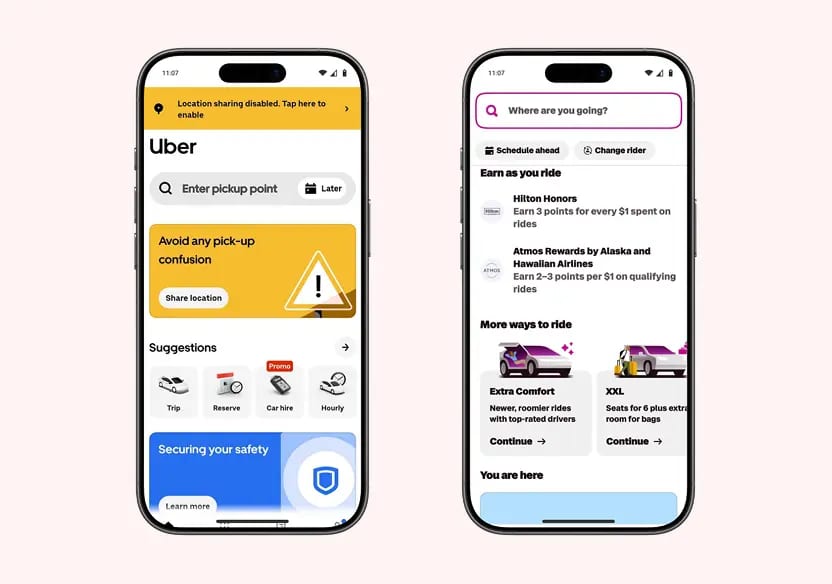
Look at how Uber and Lyft do it. Their home screen shows one thing: where do you want to go? No clutter, no extra steps.
AI-Powered Driver and Rider Communication
Language gaps cause trips to fail. Auto-translation in the chat means a driver and rider who speak different languages can still work together.
Voice messages help drivers who cannot type while they wait.
Advanced Safety Features
Let riders send a live trip link to a friend or family member.
The SOS button should alert your support team and the rider's emergency contact at the same time. Safety features build trust, and trust brings repeat riders.
Reward Points and Discounts for Regular Users
Riders who use your app five or more times a week should get something back.
A basic points system where credits build toward free rides keeps them coming back instead of switching to a rival app.
Taxi App Rules and Regulations in Different Countries
Earlier, we covered what to check before launch. Now, let us look at exactly what those rules look like in each country.
Why Rules Matter for Taxi Apps
Most governments treat taxi apps as transport companies, not just tech tools.
Your drivers may need licenses, your app may need local approval, and your prices may face limits in some cities. Break the rules, and your app gets pulled or shut down.
Key Country-Wise Differences You Should Know
Here is what you need to know before you pick your first market.
📍 United States
New York requires drivers to register with the TLC before they take any trips. California uses AB5 to decide if drivers are employees or freelancers. That one rule changes how you pay them, manage them, and run your whole business there.
📍 Nigeria
Lagos has its own ride app rules. You need local approval before you can go live in the city. Skip this step and your service gets blocked.
📍 Canada
Ontario's Digital Platform Workers Rights Act covers ride app drivers. It sets minimum pay for active work time, clear tip rules, and protection from unfair treatment. Know this before you enter the Canadian market.
📍 Germany
The EU Platform Work law applies here. If your app controls pay, work hours, and how drivers are rated, those drivers must be treated as full employees, not freelancers. That means more costs on your end.
📍 United Kingdom
Drivers need a private hire license to work on any ride app. A 2021 court ruling on Uber also set a rule that drivers may count as workers, which gives them rights to minimum wage and paid leave.
Check the local laws for each market before you enter. What works in one city may get your app blocked in the next.
Conclusion
Building a taxi app in 2026 is very possible. You need a clear niche, the right build approach, and a design that real people can use without help.
Follow the seven steps in this guide, and you have a full picture of how to create a taxi app that works. Get the legal side right before you launch. Start in one city, make it work, then grow from there.
Some founders build everything themselves. Others start with a ready-made base and spend their energy on the business side instead. If you are in the second group, our taxi booking script might be worth a look.
Request a product demo
Get a demo and clarify your doubts about our software.

