






Inside the article
Request a product demo
Get a demo and clarify your doubts about our software.
Key Takeaways
- Plan and sort your legal setup first before taking any jobs, know what services you offer, check your local licensing requirements, and choose the right business structure.
- Charge $70–$130/hour and make sure your rate covers travel, materials, taxes, and admin time. Underpricing burns you out and attracts bad clients.
- Get liability insurance, always use a service contract, and keep a separate business bank account from day one to protect yourself legally and financially.
- Never take jobs beyond your skill level, as one bad job in a local market can destroy your reputation since most new work comes from referrals and word of mouth.
- Reply fast, set clear expectations, and follow up after every job to turn happy clients into repeat business and referrals, because communication wins more work than skill alone.
Starting a handyman business is one of the lowest-cost ways to build a real income in 2026.
But here is the hard part: most handyman businesses fail in the first year, not because the work was bad, but because the business side was ignored.
That is the part nobody warns you about.
The skills that make you good at fixing things are not the same skills that make a business run.
This guide walks you through exactly how to start a handyman business and the critical mistakes you should never make when entering this niche.
Steps to Start a Handyman Business
Write Up a Handyman Business Plan
A business plan for a handyman business does not need to be a 40-page document, but it needs to answer a few key questions before you take your first job. Writing these down helps you make better decisions from the start:
- What services will you offer?
- Who are your customers?
- How will you charge for your work, hourly or per project?
- How far are you willing to travel?
Getting these answers on paper keeps you focused and gives you something to refer back to. It also helps later if you need a business loan or want to hire someone.
Decide What Services You Will Offer
Start with the services you are experienced and legally allowed to provide. Common handyman services include painting, drywall repair, carpentry, furniture assembly, door repairs, flooring, and general home maintenance.
Choosing a focused set of services makes it easier to price your work, buy the right tools, and market your business to the right customers. You can expand your services as your business grows.
Don't Skip the Legal Paperwork
Every state has its own rules for handymen, and some require a license for jobs above a certain price, while others limit electrical or plumbing work to licensed tradespeople, no matter how small the job is.
Look up what your state and county require before you start taking calls, because working without the right license can mean fines, cancelled contracts, and costs that are much higher than what the license would have been.
Pick the Right Business Structure for You
There are a few ways to set up a handyman business, and the one you pick affects your taxes, your liability, and how protected you are if something goes wrong. The most common options are:
Sole Proprietor: No paperwork, no cost, and the fastest way to get started. The downside is that there is nothing separating your personal money from your business. If a client takes you to court, your personal savings are at risk.
Partnership: If you are starting with someone else, this is worth looking into, but it comes with its own legal and financial responsibilities.
Marketplace or App-Based: One of the easiest ways to grow without doing all the work yourself. You run a platform that brings customers and local handymen together. A lot of people get started with a ready-made whitelabel platform like Taskrabbit clone instead of coding one from the ground up. It saves time and gets you to market faster.
The platform takes care of:
- Booking jobs
- Matching customers with the right person nearby
- Processing payments
- Collecting ratings and reviews
Register Your Handyman Business
Choose a business name and register your business with the appropriate state or local authority. You may also need an Employer Identification Number (EIN), local business licenses, or permits depending on how and where you operate.
Check that your business name is available before registering it, and consider securing a matching domain name for your website.
Figure Out How You're Going to Fund It
If you already own your tools, you can get started for under $1,000 by covering insurance, a little marketing, and your LLC setup, but if you are starting from scratch, plan to spend between $3,000 and $5,000.
The harder part for most new operators is not having enough cash in the early weeks, since you often have to buy materials before the client pays you. Having at least one month of expenses saved before you go full-time means you can keep the business running even when work is slow.
Get the Right Tools and Equipment
Start with the basic tools needed for the services you plan to offer. This may include hand tools, power tools, ladders, measuring equipment, and safety gear.
You don't need to buy every specialized tool on day one. Start with the essentials and add equipment as you take on more types of jobs.
Know What to Charge Before You Start Working
Most handymen in the U.S charge between $70 and $130 per hour in 2026, but your rate needs to cover more than just the time you spend on the job. Travel time, materials, the hours you spend on emails and invoices, and the taxes you owe all have to be part of the number.
Look at what other handymen near you are charging, then work out a rate based on what it actually costs you to run the business.
Get Liability Insurance Before You Start Working
Most handymen skip liability insurance because they think nothing will go wrong.
Liability insurance covers you when something goes wrong on a job, like a broken tile, a damaged wall, or a repair that fails and causes more damage. Without it, one bad job can wipe out weeks or months of earnings through legal costs and out-of-pocket repairs.
Most handyman businesses carry between $1 million and $2 million in coverage, and the yearly cost is usually between $500 and $1,500. That is less than what most single jobs bring in, and it covers you for the whole year.
To understand the coverage types, risks, and protection options in detail, explore handyman business insurance, which helps protect your business from liability, property damage, and legal risks.
Open a Business Account Before Starting Your Business
Using your personal bank account for business money causes problems that take a long time to sort out, especially when tax season arrives or you need to prove a payment in a dispute.
Opening a free business checking account takes about 30 minutes, and running every job-related transaction through it from day one keeps your records clean and easy to follow.
Use a Service Contract on Every Single Job
A service contract spells out what work you will do, what it will cost, and how long it will take before you ever pick up a tool.
It stops clients from adding more work halfway through a job without paying for it, and it protects you when someone claims the job included something it did not. You can find free contract templates online, have a lawyer look it over once for a small fee, and then use it on every single job from that point on.
Find Something That Keeps You Organised
Once you are running several jobs a week, keeping track of quotes, invoices, schedules, and client details in your head stops working, and things start slipping through.
Apps like Jobber and Housecall Pro handle everything from booking to billing in one place and are built for exactly this kind of business. If you want to go bigger, you can even launch your own white-label handyman platform to manage all your jobs and clients.
Market Your Handyman Business
Create a Google Business Profile with your service area, contact details, working hours, and photos of your work. A simple website can also help potential customers find your services through local searches.
Ask satisfied customers for reviews and use referrals, local directories, social media, and partnerships with property managers or real estate agents to generate more leads. Focus on building a strong local presence first rather than trying to reach customers across a large area.
Start a Handyman Marketplace
If you don't want to perform the work yourself, another option is to build a marketplace that connects customers with independent handymen. Customers can request services while local professionals accept and complete the jobs.
A ready-made solution such as a TaskRabbit clone can provide features for booking, provider management, payments, ratings, and reviews without building the platform from scratch.
Common Mistakes New Handyman Businesses Make
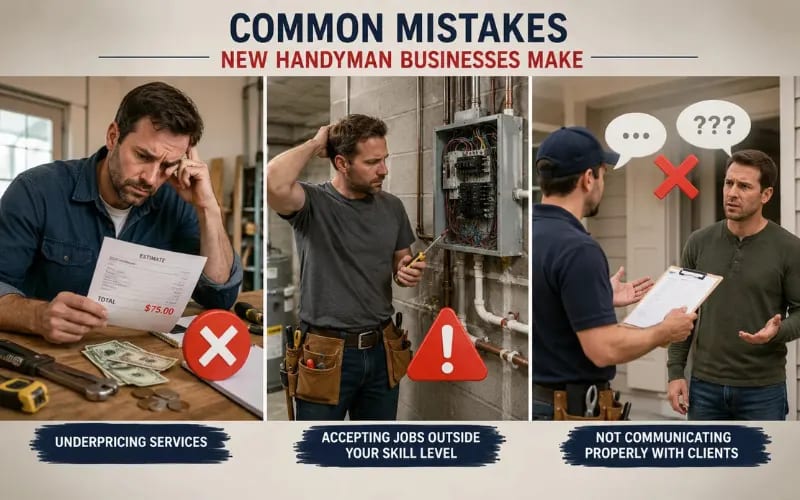
Underpricing Services
As we discussed earlier, about how to set the right price, never make this mistake if you are a beginner.
A lot of new handymen charge less, thinking they will get more work. It may bring in a few jobs at first, but here is the problem you end up doing ten jobs to earn what one right-priced job would have paid.
Low prices also pull in cheap clients, and those clients will never want to pay more, no matter how good your work is. So what should you do? Check how full your schedule is. If you always have more work than you can handle, it means people are fine with what you charge. That is the right time to ask for more money per job, not keep doing more work for the same low pay.
Accepting Jobs Outside Your Skill Level
Saying yes to every job feels like the right move early on, but one job done badly spreads fast in a local market where most new work comes from referrals and word of mouth.
Anything structural, load-bearing, or requiring a permit should stay off your list unless you are licensed to do it, and sending that work to someone who builds trust with clients is far better than taking the job and getting it wrong.
Not Communicating Properly With Clients
Poor communication loses you more work than bad skills ever will, and most handymen do not even notice it happening. When a client calls about a job and you take two days to reply, they have already moved on to someone else by then.
When you finish a job and never check in, you miss the chance to turn one happy client into three more jobs through word of mouth. Clients do not just pay for the work; they pay for how easy you are to deal with. Reply fast, be clear about what you will do and when, and follow up after every job.
Pros and Cons of Starting a Handyman Business
Advantages of the Handyman Industry
Home repairs never stop because pipes leak, doors break, and gutters fill up all year, no matter what is going on. The global handyman services market hit around $85 billion in 2025 and is growing at 6% every year, and the U.S alone accounts for $273.6 billion of that when you include the full home services industry, according to Archive Market Research.
That means there is always work out there for a handyman who does the job right. It does not cost much to get started, you pick your own hours, and when clients are happy, they come back and bring their friends. You will not need to spend much time or money looking for new work once you build a good name for yourself.
Long-Term Growth Opportunities
A strong local reputation opens up options that are not obvious when you are just starting, like moving into higher-paying work, adding another person to the team, or locking in property maintenance contracts that pay the same amount every month without needing to find new jobs constantly.
Some handyman businesses grow into full home renovation companies with strong yearly revenues, and that path starts with the same basics this guide covers.
How Can You Grow a Handyman Business?
Growing a handyman business is not just about taking on more jobs. You need to increase your customer base, build a strong local reputation, and improve how you manage your work as demand grows.
Build a Strong Local Reputation
Deliver reliable work, communicate clearly, and ask satisfied customers for reviews. Positive reviews and referrals can help you attract more customers in your service area.
Expand Your Service Offerings
Once you have a steady flow of work, consider adding related services that your customers frequently request. This can help you increase the value of each customer and create additional revenue opportunities.
Build Partnerships
Partner with property managers, real estate agents, contractors, and local businesses that regularly need handyman services. These partnerships can provide a steady source of new jobs.
Hire and Train More Handymen
When you have more work than you can handle, bringing in additional handymen allows you to accept more jobs without sacrificing service quality. Make sure new workers meet your quality and customer service standards.
Conclusion
Handyman work is one of those businesses where demand never stops, pipes leak, walls get damaged, things break, and homeowners always need someone they can trust to fix it. The work is always there.
What makes the difference between someone who builds a real business and someone who quits in the first year is never about skill. It is about how the business is set up, charging the right price, having a contract before every job, and getting insurance before something goes wrong.
Request a product demo
Get a demo and clarify your doubts about our software.

